Fatigue isn’t just about needing more sleep. It’s what happens when your energy, capacity and recovery are slowly eroded over time. When it goes unrecognised, it quietly starts shaping how we work, how we relate to others and how we feel about ourselves. When “just tired” becomes something more.
Fatigue often develops gradually, making it easy to miss in its early stages. At first, you might notice you’re slower to focus. Tasks take longer. Mistakes creep in. You feel irritable or emotionally flat. Work that once felt manageable suddenly feels overwhelming. Because fatigue is so common, it’s easy to minimise: “Everyone’s exhausted.” “I just need to push through.” “It’ll get better once things calm down.” But persistent fatigue is rarely random. It’s often a sign that demands are outweighing recoverywhether due to workload, stress, life presspressures, health conditions or a combination of all three.
How fatigue shows up at work It shows up quietly:
Fatigue often looks like struggling to focus, rereading emails or forgetting small details. Tasks take longer-not because of lost skill, but low mental energy. Emotions feel heavier: Patience runs thin, interactions feel more effortful and people may seem irritable, withdrawn or disengaged-present in body, but drained mentally. People push harder to cope: Many try to compensate by working longer hours, but this usually leads to less impact, not more and growing frustration.
Confidence takes a hit: Ongoing fatigue can chip away at motivation and self belief, making capable people question themselves when the real issue is capacity, not competence.
The risks add up: When fatigue is ignored, it can lead to burnout, mental health strain, frequent absences or extended time away from work. Early action matters: Noticing and addressing fatigue early helps protect wellbeing, sustain performance and prevent more serious outcomes.
The impact on relationships-at work and at home:
Fatigue doesn’t stay neatly contained within working hours. When energy is depleted, so is emotional resilience. People who are fatigued often: withdraw socially become more irritable or sensitive avoid conversations they don’t have the energy for feel misunderstood or unsupported At work, this can strain relationships. At home, it can affect family dynamics, friendships and connection with loved ones. Fatigue can create distance-not because someone doesn’t care, but because they don’t have anything left to give.
Small shifts that make a real difference:
Protecting sleep Sleep underpins focus, emotional regulation and resilience. Regular sleep disruption makes everything harderfrom concentration to coping with stress.
Building recovery into the day Short breaks, movement and stepping away from screens help regulate energy. Constant “on” mode is a fast track to depletion.
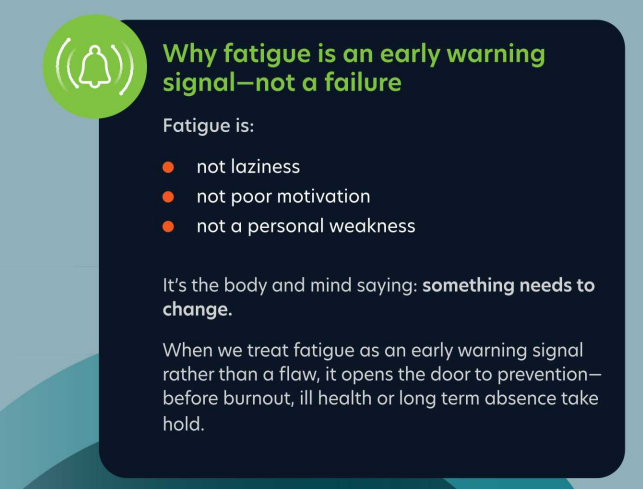
Why fatigue is an early warning signal-not a failure Fatigue is: not laziness not poor motivation not a personal weakness It’s the body and mind saying: something needs to change. When we treat fatigue as an early warning signal rather than a flaw, it opens the door to preventionbefore burnout, ill health or long term absence take hold.
Reducing cognitive overload Multitasking, endless meetings and competing priorities drain mental energy. Clarity and focus support both wellbeing and performance
Normalising conversations about capacity Fatigue often improves when people feel safe to say, “This is a lot right now.” Early conversations prevent escalation.
Seeking support early When fatigue is persistent or worsening, support matters.
Adjustments, flexibility or professional input can prevent a temporary struggle from becoming a long term issue. Fatigue doesn’t resolve through willpower alone. Sustainable work and wellbeing require ongoing attention to capacity, recovery and support. Whether you’re an individual, manager or organisation, noticing fatigue early is a powerful prevention strategy-not a sign of failure.