Most of the time I walk along the shoreline of Camps Bay in Cape Town I am catching plastic.
Bottle tops, straws, left over polystyrene packaging and more often than I would like to count, nappies. Yep. So, I thought to share a moment of the wonders of a friend. She went to the shorelines of Sedgefield and met the most curious and beautiful creatures. My favourite is the octopus. What a supernatural complex being. They are super hearted too and have three which may mean they have bigger reach than ours. Each of their tentacles has its own brain and can solve intricate puzzles as a result. Imagine having a brain at each end of your fingertips.
When they hatch they are no bigger than a grain of rice yet they can handle the ocean and grow. Their curiosity is remarkable as is their ability to utterly shape shift and if that’s not amazing enough, camouflage themselves. It’s their invisibility cloak and this is why to me they are magical and worthy of not chopping up and deep frying. Scroll to the videos to see them in action.

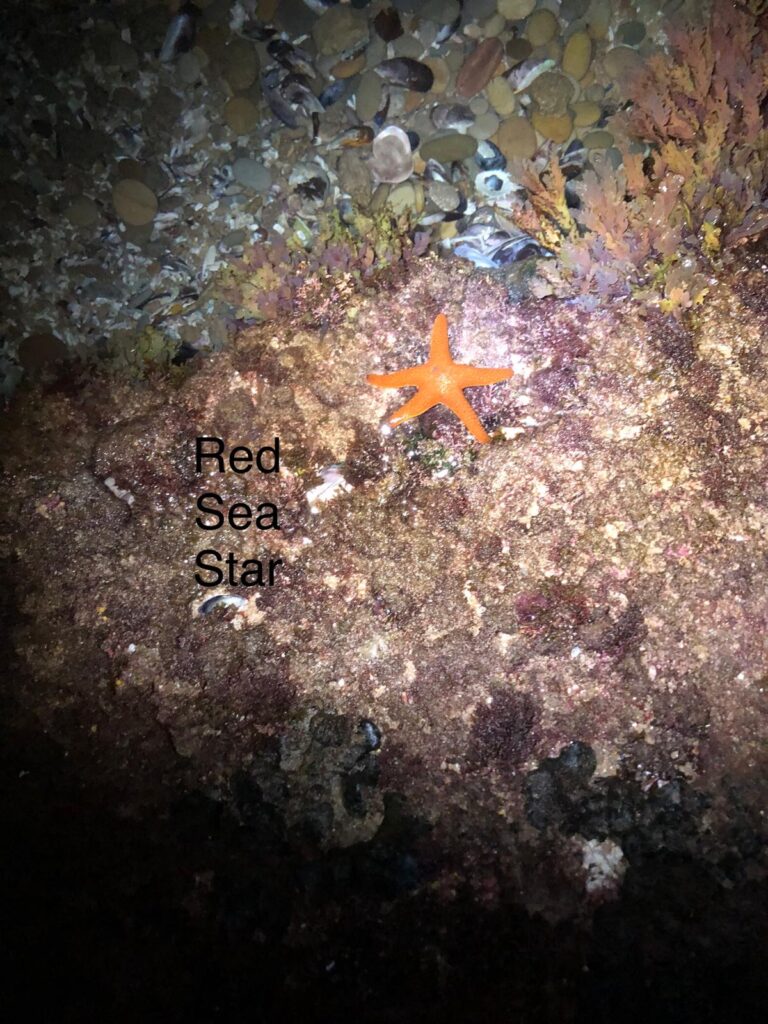
Five creatures, five threads in the same living ecosystem and each one a different argument for the necessity of everything.
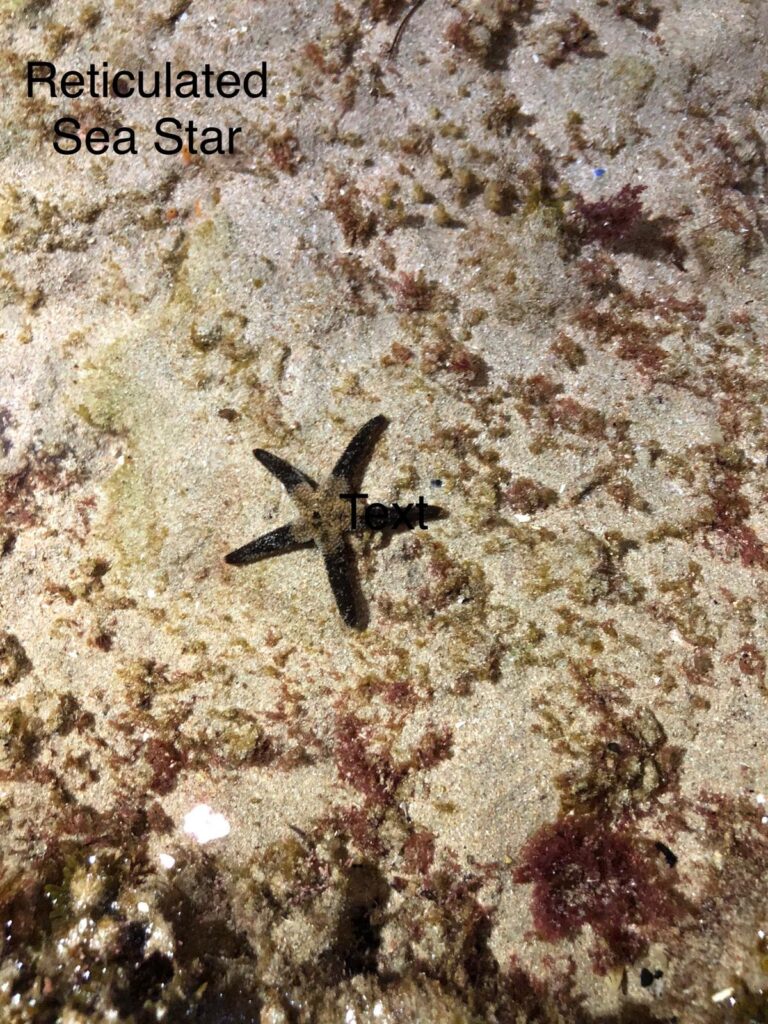
The Reticulated Sea Star (Oreaster reticulatus) blazes across Caribbean seagrass beds in orange and rust, the largest sea star in its range. It forms organised feeding fronts with others of its kind, sweeping the seabed of microalgal films — a slow tide of mouths maintaining the clarity seagrass requires to breathe. In some populations up to 61% of individuals feed on sponge tissue, pruning the sponge garden, preventing any one species from choking the reef’s plurality. When experimentally displaced, individuals reorient and return to their group within 24 hours, as though the colony itself exerts a gravitational pull. A creature that navigates by belonging.
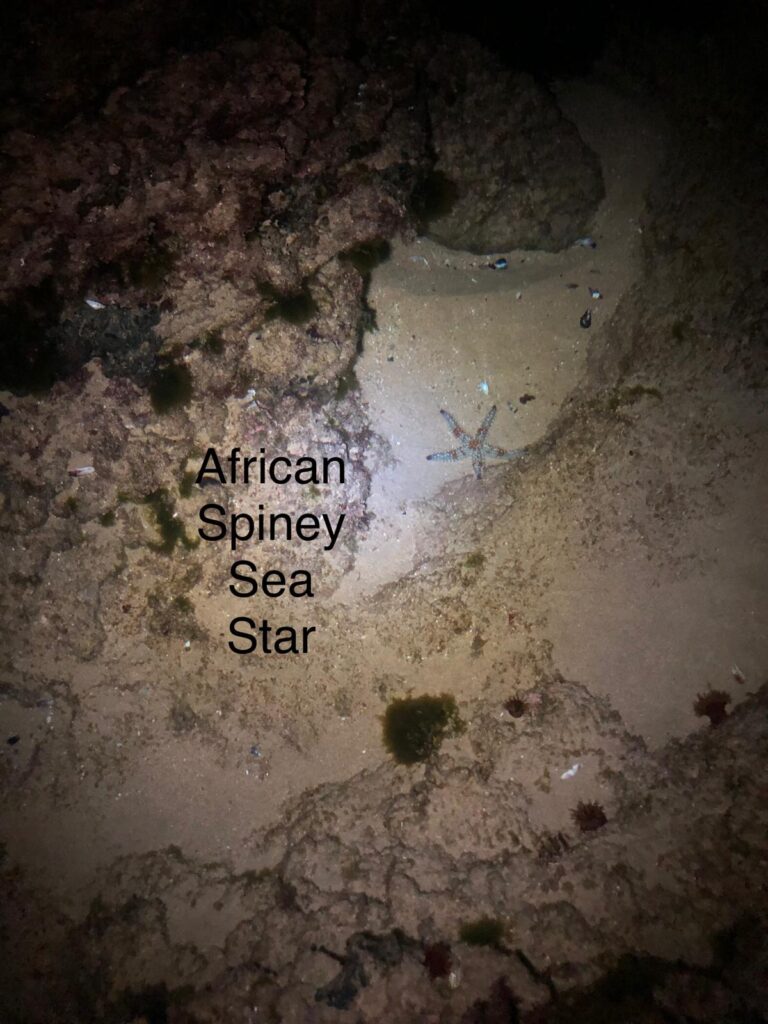
The Spiny Sea Star (Pisaster ochraceus): the animal that gave science the very concept of a keystone species. Ecologist Robert Paine demonstrated in the 1960s that removing even a few individuals caused mussels to monopolise the shore, reducing the diversity of the intertidal community profoundly. A single individual can consume eighty mussels in a year, keeping space available for anemones, sponges, limpets and algae. It can evert its stomach through its mouth, insert it into a mussel shell and digest the animal within — predation as an act of architectural patience.
The Dwarf Cushion Star (Asterina gibbosa) asks us to consider what it means to be miraculous in miniature. On British and north-east Atlantic rocky shores, it is the only true starfish found in the intertidal zone — a kingdom of one, in plain sight. It feeds by everting its stomach directly onto rock surfaces, dissolving the film of bacteria and diatoms beneath it with enzymes — a creature that eats the invisible, tending to layers of life no eye can see unaided. And it is born male and becomes female as it ages, a sequential transformation that mirrors the way all living things contain multitudes. Its tube feet carry a remarkable legacy beyond the shore: research into Asterina gibbosa‘s temporary adhesion system — a duo-gland mechanism capable of strong, reversible attachment — has been identified as a key source for developing biomimetic reversible glues, with marine biological adhesives representing a promising frontier for biomedical and industrial applications. This has since inspired starfish-modelled artificial tube feet composed of soft hydrogel mouths on rigid stems, capable of strong underwater adhesion and autonomous, switchable release — locomotion as a design philosophy, borrowed from a creature barely the width of a hand.
The Ringed Goniobranch (Goniobranchus annulatus) — a nudibranch, which is to say a creature that discarded its armour entirely and chose chemistry instead. Nudibranchs are the most commonly cited examples of aposematism in marine ecosystems, their vivid colours functioning as billboard warnings to predators, whilst their soft bodies carry toxins sequestered from the sponges they consume. As carnivores, they play an important role in the marine ecosystem by controlling sponge populations — pruning one guild of filter feeders to keep the reef’s composition plural. Pharmaceutically, they are a treasure barely opened: compounds extracted from Goniobranchus species include novel diterpenoids concentrated in the mantle tissue, with documented cytotoxic activity, making the genus a frontier for oncological drug discovery.

The Speckled Sea Hare (Aplysia argus): ( seen in the video below) ranges from olive to brown, marked with white specks and black rings — a creature wearing its environment rather than hiding from it. It mates in chains of three or more, each individual simultaneously donating sperm to the one ahead and receiving it from the one behind — a living embodiment of the truth that giving and receiving are the same gesture. Its continuous grazing on algae prevents the overgrowth that could smother the seagrass beds on which countless other species depend.
The genus Aplysia carries a deeper legacy still: it was Aplysia californica whose outsized neurons gave Eric Kandel the tools to map the molecular basis of memory — because its nervous system proved an ideal model for studying how learning changes the brain at the cellular level, earning a Nobel Prize and illuminating the terrain of human remembering The shore is not a collection of species. It is a conversation and each creature has a word without which whole sentences lose meaning.
Remove the star, and the mussel monopolises. Remove the sea hare, and algae silences the seagrass. Remove the nudibranch, and we lose both a canary and a library.
The intertidal zone has been composing these stories for hundred of million years; we are, at best, recent and attentive speakers who need to listen more in this round of the chat.
View these wonderful videos below
If you want to find out more about how and why protecting ocean species matters check out the campaigns of the Sea Shepherds . They are doing brilliant work to raise awareness of the sentience of the octopus and to stop the fishing industry ravaging their populations.
An amazing book to read is “Other Minds” – The octopus and the evolution of intelligent life by Peter Godfrey – Smith.
Images and videos courtesy of Mary Coffey, thank you. Claude AI for the research into the genus and associated biomimicry discoveries.